Seminar for IT project managers, IT architects, operations managers, and IT procurement
Data Center Migration moving IT from an existing facility to a new build
Migration strategy, procurement, IT architecture, and project control, drawn from completed projects
At a glance
In five days, you learn how the IT of an existing data center moves into a new build: which of the three migration paths suits your organization, how to procure and tender hardware and services, how to steer the project with a layer model, master list, and reporting, and how to make testing, commissioning, and handover to operations succeed.
You can then justify your migration path to management, procurement, and operations with criteria others can follow.
The IT side of a new build
The seminar covers the IT side of a new data center build, not the building services: the initial IT fit-out, the move of existing systems and applications, and the transition into operation.
The stages of a migration project
The seminar leads from the drivers and target picture of a new build through the procurement process with tendering and contract types to the IT architecture with base services, platforms, and application migration, to project control with a master list and reporting, and on to testing, commissioning, handover to operations, and project closure. The three migration paths, Lift & Shift, new IT purchase, and a parallel build with a new architecture, are compared with their advantages and disadvantages.
A completed new build
The basis is a concrete, completed example: the new build of a corporate data center that is now in operation; in addition, a simulation game on project planning and group work.
Trainers with real project experience
The trainers have real project experience: in consulting on and steering new-build and migration projects, in managing a consulting firm for data centers, and in IT infrastructure and IT security at an operator that has moved into a new build.
Why Data Center Migration?
Anyone who operates a data center will sooner or later face a migration: from an existing facility to a new build, into colocation or the cloud, or from the cloud back into their own facilities.
If you run the migration as a project with a scope, master list, reporting, and planned handover, you know every dependency and every responsibility on moving day.
This saves you improvised switchovers and protects you from regular operation that starts without handover documentation, trained staff, and operating parameters. The seminar follows a migration project step by step: from the internal and external drivers and the target picture through the procurement process with tendering, evaluation criteria, and contract types to the IT architecture with base services, platforms, and application migration, to project control with a layer model, master list, and reporting, and finally to testing, commissioning, handover to operations, and project closure.
Moving while the business runs
By then, the new build itself is usually designed or built; the real task is moving the IT while the business keeps running.
Three paths, several decision-makers
There are three paths: take the existing hardware along (Lift & Shift), buy new IT, or build a new architecture in parallel and migrate the applications step by step. Each path affects time, budget, scope, and risk, and the decision is rarely made in IT alone: procurement, project control, operations, and management have a say. That is where the seminar comes in.
Strategy and training under EN 50600-1
The standard sets the framework: under EN 50600-1, every data center project starts with the IT strategy and an analysis of current utilization, and operations staff must be trained in the infrastructure and procedures during acceptance testing at the latest; processes, roles, and responsibilities are defined before the first day of operation.
Handover under EN 50600-3-1
Under EN 50600-3-1, designers and builders hand over the intended operating parameters for different loads at the handover to operations, and the IT load is low at the start of the life cycle.
Who it is for
Who is this seminar for?
IT project managers and project managers for data centers
who are responsible for planning, steering, and implementing a migration or new-build project.
IT architects and infrastructure planners
who are responsible for the concept, architecture, and technical implementation of IT and data center systems.
Network and IT security managers
who plan and operate network, security, and redundancy concepts for the new build.
Data center operations managers on the IT side
at organizations with their own data center and at colocation, cloud, and IT service providers.
Operations managers from facility management
who form the interface to IT.
IT procurement and purchasing
who select, tender, and procure hardware, software, and services, including those responsible for public tenders.
IT directors
who are responsible for infrastructure strategy, investment decisions, and the direction of the IT landscape.
Data center consultants
who need the overall picture from construction to IT migration.
Those responsible for operations, quality, and certification
from monitoring, documentation, and reporting to the certification of the new data center.
There are no prerequisites; neither the Data Center Specialist training path nor any of its seminars is required. The seminar is aimed at the IT side of the project and at teams that have to work across disciplines (IT, procurement, project control), in organizations with an upcoming new build, modernization, or migration.
Trainers and credentials
Trainers who work on current projects
The trainers on this seminar come from real projects; they have applied what they teach in their own data center projects. Which trainers lead a date depends on the date and format; the content is the same.
Oliver Bartsch
Managing Partner · do-projects GmbH
Vendor-neutral
DCE academy does not sell products and does not represent any manufacturer. Its only aim is to pass on knowledge and train people well, with experts who know their subject from ongoing projects. Products are not sold in the seminar.
First-hand standardization work
DCE academy is the exclusive sponsor of the ISO/IEC 22237 working group and is informed about every meeting of the standards committee and its content. Changes to EN 50600 and ISO/IEC 22237 are incorporated into the seminars, often months before publication. Member of the German Datacenter Association.
- Training since 2007
- for the planning, construction, and operation of data centers
- More than 1,000 participants
- with a DCE academy certificate
- More than 25 experts
- among our trainers
- 98% of participants
- rate their seminar as good or very good (feedback forms 2023–2026)
What you will take away
After the seminar you will be able to
assess the three main migration paths, Lift & Shift, new IT purchase, and a parallel build with a new architecture, with their advantages and disadvantages, and derive the migration path for your organization;
name the internal and external drivers of a new build, define the project’s expectations and goals, define the assignment as “in scope” and “out of scope,” and draw up a roadmap for the initial fit-out with time and scope planning;
apply the layer model “Initial Fit-Out of a New Data Center,” based on the OSI model, as a thinking tool for system architecture, responsibilities, and reporting;
plan a procurement process like a project: phases and steps, roles and interests of those involved, specification of services and evaluation criteria, supplier selection, contract types, and the formal requirements of public tenders;
classify base services, platforms (IaaS, PaaS, SaaS), and application migration, and understand the phases of a cloud migration with their technical, organizational, and strategic consequences;
steer a migration project with classic, agile, or hybrid methods, with a master list as the central data source, automated reporting, and stakeholder communication, and plan ordering, delivery, installation, and the handling of decommissioned hardware;
assess internal and external test procedures, distinguish monitoring from alerting, lead project closure with acceptance documentation, lessons learned, handover to operations, and discharge of the project team, and classify certifications as a planning criterion for the new build.
Content
Five modules
The five modules follow a migration project step by step: from the target picture and layer model through procurement and architecture to project control and the transition into operation.
A new build has drivers from inside and outside, and the project only succeeds with clear expectations and goals. The module structures the initial fit-out of a new data center with a layer model based on the OSI model and shows, using a completed new build, how the roadmap, schedule, and overall scope come about.
- Internal and external drivers, motivation, and expectations of a new-build or migration project
- Creating structure: working out the schedule and overall scope in exercise phases
- Layer model “Initial Fit-Out of a New Data Center,” based on the OSI model: separating responsibilities, structuring systems
- Roadmap of an initial fit-out: phases and components, graphical representation of the approach
- The IT lab as a test and innovation environment that reduces risks before the migration
- Field report: a concrete, completed example, the new build of a corporate data center that is now in operation, from the existing facility to the new build
Procurement processes rarely fail because of technology; they usually fail because of roles, the specification of services, and communication. The module treats procurement as a project: from the signs of a procurement project through the phases and steps to supplier selection and the formal requirements of public tenders.
- Why procurement processes fail; roles and interests in purchasing
- Understanding and documenting your own procurement process
- Reaching the goal with structure: the phases of a procurement process and their steps
- Specification of services, tender content, evaluation criteria, supplier selection, external support
- Contract types with advantages and disadvantages; formal requirements and legal framework of public tenders
- Communication and cooperation between departments and stakeholders
Lift & Shift or new purchase: the decision depends on the architecture that is to run in the new build. The module classifies base services, platforms, and application migration, explains what modern IT architecture achieves, and applies the layer model as a thinking tool for the system architecture.
- Base services as the backbone of the IT infrastructure: robust and scalable
- Distinguishing platforms (IaaS, PaaS, SaaS) and classifying their context of use
- Application migration: challenges and early planning; concepts and phases of a cloud migration
- What IT architecture is: goals, principles, structure of systems, communication, and development
- Lift & Shift, new IT purchase, or a parallel build with a new architecture: assessing the three paths
- Transferring lessons from completed projects to your own projects
A data center migration is a physically tangible project with more people involved than first expected. The module introduces project management for IT infrastructure projects, compares classic, agile, and hybrid methods, and shows how a master list, reporting, and stakeholder management keep track of everything.
- Project management for IT infrastructure projects: classic, agile, hybrid; tools from the Gantt chart to the Kanban board
- Project assignment with “in scope” and “out of scope”; typical influencing factors and challenges in migration projects
- Data for planning, coordination, and implementation: sources, the master list as the single source of truth, automated reporting, work breakdown structure
- Simulation game: planning a data center migration in a group
- Ordering, delivery, and installation: tenders, delivery times, compatibility, market situation; new procurement and handling of decommissioned hardware (sale or scrapping)
- Stakeholder management with site visits and tours; using experience from earlier projects and from service providers
The move does not end with the last rack but with an operation that has been taken over and documented. The module covers test procedures, monitoring and alerting, project closure and handover to operations, and certifications and efficiency as criteria for new builds and existing facilities.
- Test procedures for a data center migration; internal and external tests with advantages and disadvantages
- Monitoring and alerting: the difference and their contribution to operational reliability
- Project closure: acceptance documentation, lessons learned, discharge of the project team; handover to operations and takeover by operations
- Sustainability and efficiency improvements in an existing data center with practical, often low-effort measures
- Certifications as a planning criterion for new builds and certification of existing data centers: EN 50600, Blauer Engel, ISO 50001, and other certifications and criteria catalogs common in the market
Standards and practice
Standards, laws, regulations
The seminar covers the following standard parts, laws, and regulations:
EN 50600‑1 General concepts
Planning phases of a data center project; the strategy phase with IT strategy, data center strategy, and analysis of current utilization; construction with acceptance inspection; operation as handover to the owner; training of operations staff during acceptance testing at the latest (Clause 8)
EN 50600‑3‑1 Management and operational information
Data center strategy; change, configuration, and capacity management; operating parameters at the handover to operations and partial-load operation at the start of the life cycle; monitoring and event management
Certification according to EN 50600
Planning criterion for new builds, certification of existing data centers
Blauer Engel ecolabel for data centers
Certification as a planning criterion
ISO 50001
Certification of energy management as a planning criterion
Other certifications and criteria catalogs common in the market
Planning criterion for new builds and for existing data centers
Public tenders
Contract types and formal requirements (seminar content, not part of a standard)
How it works and prerequisites
How does the seminar work?
Five days in person
Five seminar days in person. The first seminar day usually starts at 10:00, the following days at 09:00; the seminar ends at around 17:00, and at around 13:00 on the fifth day. Several trainers share the five days by topic.
Practice on a completed new build
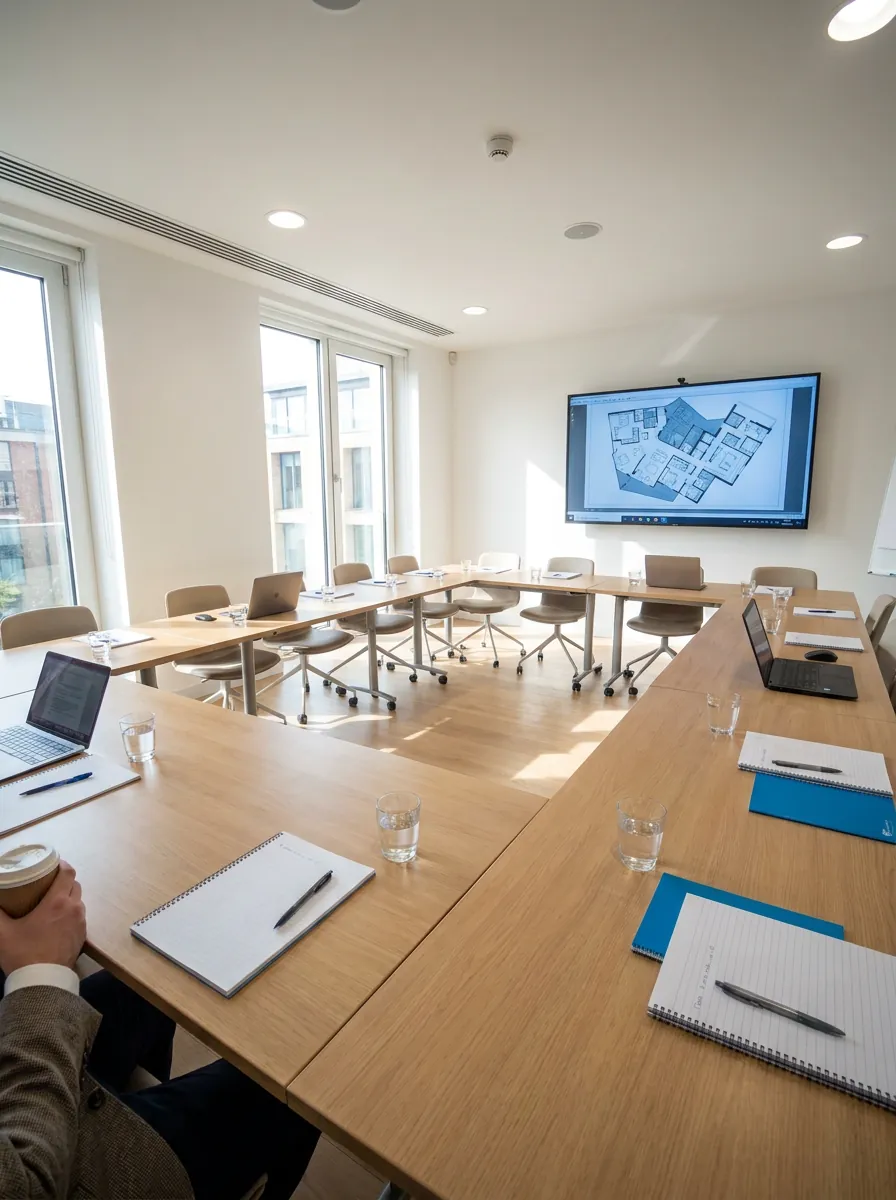
A large part of the time is practical work: the report from a completed new-build project that the seminar works with, exercise phases on schedule and overall scope, a simulation game on planning a migration, and group work assessing migration paths and decisions; each topic block ends with a short knowledge check in the group.
Materials and exchange
You receive the seminar materials as a PDF in the language in which the seminar is held. Drinks, coffee, and lunch are included, and there is time to talk with the other participants and with the trainers, who have real project experience.
Exam and certificate
After the seminar, you receive the link to the online exam by email and have one week to take it. When you pass, you receive the seminar certificate, which does not expire and can be verified publicly; you will find the seminar materials and the certificate in DCE Campus.
Prerequisites: none
Neither the Data Center Specialist training path nor any of its seminars is a prerequisite. Experience in IT operations, project control, or procurement helps, because the seminar works with real project examples; if you want to get to know the disciplines of a data center, you will find them in the seminar Data Center – General Principles.
Dates and registration
Choose a date and format
Same content, same price, same certificate in every format.
€6,990 per participant, plus VAT, in every format
- Register
In person · Munich · German
- Register
In person · Frankfurt am Main · German
- Register
In person · Frankfurt am Main · German
No suitable date, or several participants from one company? Thomas Wawra advises you on dates, formats, and framework agreements.
Before you register
Frequently asked questions
That depends on schedule, budget, scope, and risk, and on the architecture that is to run in the new build. Lift & Shift takes the existing hardware along, a new purchase replaces it in the new build, and a parallel build sets up a new architecture and migrates the applications step by step. In the seminar, you assess the three paths with their advantages and disadvantages using real project examples and derive the migration path for your organization.
As a project with drivers, goals, and a clear scope, with a layer model for the initial fit-out, a roadmap, a master list as the central data source, and reporting that keeps stakeholders informed. Add procurement and tendering, ordering, delivery, and installation, and testing, commissioning, and handover to operations. The seminar follows exactly this path in five days, with a simulation game and group work.
About the IT: initial fit-out, migration of systems and applications, procurement, project control, and the transition into operation. The design and implementation of the building and the disciplines according to EN 50600 are covered in the seminar Data Center Design & Implementation. If you are responsible for both, combine the two seminars.
No. The seminar has no prerequisites; neither the training path nor any of its seminars is required. Experience in IT operations, project control, or procurement helps when transferring the project examples to your own project.
Yes. One seminar day is devoted to the procurement process: why procurement projects fail, roles and interests, phases and steps, specification of services and evaluation criteria, contract types, and the formal requirements of public tenders. The seminar is designed for cross-functional teams from IT, procurement, and project control.
Not at present. Data Center Migration is held as an in-person seminar in German, in English on request; dates, locations, and availability are shown in the seminar dates.
Yes. DCE academy does not sell products and does not represent any manufacturer; no products are sold in the seminar. Its aim is to pass on knowledge and train people well, with experts who know their subject from ongoing projects.
After passing the exam, you receive a seminar certificate from DCE academy, which does not expire and can be verified publicly. You receive the link to the online exam by email after the seminar and have one week to take it. The certificate documents your qualification in data center migration, for example for future project assignments.