Seminar for operations, engineering, and planning, also for career changers
Data Center – General Principles
The data center as a system, from real projects: disciplines, availability, KPIs, and today’s requirements
At a glance
In three days, you learn how the disciplines of a data center work together, what the Availability Classes of EN 50600 mean, and which key performance indicators (KPIs) are used to assess a data center.
With planners, operators, and auditors, you then speak the same language.
The overall system
The seminar presents a data center as an overall system: building, power supply, cooling, fire protection, security systems, monitoring, and cabling.
Standards, KPIs, legal framework
It also covers the structure of EN 50600 and its international version ISO/IEC 22237, the Availability Classes, the KPIs according to EN 50600-4-x, and the legal framework, including the German Energy Efficiency Act (EnEfG).
Current practice
The trainers bring in current practice from real projects, from the requirements of AI data centers to the new EU F‑gas Regulation.
Also for experienced professionals
It is the first seminar of the Data Center Specialist training path, and it is also for experienced professionals: in every discipline, it goes deeper than an overview, down to UPS classifications, redundancy levels, and PUE categories.
Why a seminar on general principles?
In Germany and Europe, there is no degree program and no apprenticeship for data centers.
If you can only assess one discipline, you cannot assess the whole.
The seminar Data Center – General Principles therefore lays the common foundation: the terminology, the structure of the series of standards, the disciplines and their interfaces, and the logic of availability and redundancy.
Your own discipline is not enough
Anyone who takes on responsibility for a data center from electrical engineering, cooling technology, IT, or another field knows their own discipline, but rarely how all the disciplines interact.
The standard requires the overall view
According to EN 50600-1, a data center achieves an Availability Class only if each of its infrastructures meets it: power supply, cooling, and cabling.
The first step since 2019
DCE academy introduced it in 2019 as the first step of the training path, so that participants start the group work in the advanced seminars with solid basic knowledge.
No detour through the standard text
This spares you from having to start with the standard text and protects you from misinterpretations that become expensive in tendering, planning, or audits.
Who it is for
Who is this seminar for?
Newcomers and career changers
with responsibility for a data center, typically in their first three years in the field.
Operations managers in facility management and IT
who are responsible for infrastructure that was rarely part of their own training.
Technicians and engineers in building services
who know their own discipline and want to understand how the adjacent disciplines fit in.
Planners and project managers
before the seminar Data Center Design & Implementation.
Manufacturers, system integrators, and sales teams
for infrastructure components who discuss the overall system with planners and operators.
Marketing, HR, and sales in the data center sector
who need to understand the technology without working in it.
No prior knowledge is required. If you only need rules of conduct and orientation for work in a data center, the one-day seminar Data Center Passport is the right choice.
Trainers and credentials
Trainers who work on current projects
The trainers on this seminar come from real projects; they have applied what they teach in their own data center projects. Which trainers lead a date depends on the date and format; the content is the same.
Georg Foraita
gfc – consulting&more
Chief Education & Alliance Officer · DCE academy
Geschäftsführer · DCE academy
Vendor-neutral
DCE academy does not sell products and does not represent any manufacturer. Its only aim is to pass on knowledge and train people well, with experts who know their subject from ongoing projects. Products are not sold in the seminar.
First-hand standardization work
DCE academy is the exclusive sponsor of the ISO/IEC 22237 working group and is informed about every meeting of the standards committee and its content. Changes to EN 50600 and ISO/IEC 22237 are incorporated into the seminars, often months before publication. Member of the German Datacenter Association.
- Training since 2007
- for the planning, construction, and operation of data centers
- More than 1,000 participants
- with a DCE academy certificate
- More than 25 experts
- among our trainers
- 98% of participants
- rate their seminar as good or very good (feedback forms 2023–2026)
What you will take away
After the seminar you will be able to
classify the structure of the EN 50600 series of standards (Parts 1, 2-x, 3-x, 4-x, 5-x, and 99-x) and its adoption into ISO/IEC 22237, and know which part answers which question;
name the disciplines of a data center, their subsystems, and their interfaces, and read floor plans and schematic diagrams;
describe availability from the user’s perspective, distinguish Availability Classes 1 to 4 according to EN 50600-1 for each infrastructure, and explain the redundancy concepts N, N+1, 2N, and 2(N+1);
place the main components of the power supply from medium voltage to the UPS and the cooling concepts from compression refrigeration to free cooling;
read the KPIs PUE, REF, ERF, CER, CUE, and WUE according to EN 50600-4-x and judge what a value does and does not tell you;
relate the requirements of the EnEfG for data centers (PUE requirements, reused energy, electricity from renewable sources, information obligation) and the role of the EU F‑gas Regulation.
Seminar 1 of 4 in the Data Center Specialist training path
After passing the exams of all four seminars, you receive the Data Center Specialist certificate. This seminar can be booked on its own.
Content
Five modules
The five modules build up the data center as a system step by step: from standards and terminology through the disciplines and how they interact to availability, KPIs, and the legal framework.
Under EN 50600-1, what makes a facility a data center is its business purpose, not its size. The module sets out the series of standards, its international adoption, and the difference between a standard, a guideline, and a certification.
- Definition and types of data centers: enterprise, colocation, hosting, and hyperscale data centers, cloud, edge, HPC
- Structure of EN 50600: Part 1 general concepts, 2-x design, 3-x operation, 4-x KPIs, 5-x maturity model, 99-x recommended practices
- EN 50600 goes ISO: publication status of ISO/IEC 22237-x
- Standard, guideline, certification: distinguishing certification bodies and certification standards
- The IT strategy determines the data center strategy; design is a trade-off between availability, flexibility, and efficiency
Building, power supply, cooling, fire protection, security systems, monitoring, cabling, and people make up the data center as a system. The module explains each discipline with its subsystems and shows where the disciplines depend on each other.
- Building and location: location factors, Protection Classes 1 to 4 according to EN 50600, Resistance Classes according to EN 1627, requirements for the raised access floor
- Power supply: from the medium-voltage connection via transformer, standby generator, and main low-voltage distribution to UPS and busbars; UPS classifications VFI, VI, and VFD; residual current monitoring (RCM); selectivity
- Cooling: compression refrigeration, direct expansion and chilled water systems, free cooling, cold aisle and hot aisle containment, ASHRAE temperature recommendations
- Fire protection: fire prevention, fire detection, and fire suppression; aspirating smoke detection systems; gas extinguishing systems
- Cabling: structured cabling according to EN 50600-2-4 compared with point-to-point cabling, installation principles, placement of distributors (end-of-row, middle-of-row)
- Security systems, monitoring, and people as part of the system; cost breakdown according to DIN 276
Availability is viewed from the user’s perspective, not from the perspective of the installation. The module leads from the terms through the Availability Classes of EN 50600-1 to the redundancy concepts and their effect.
- Availability, MTBF, and MTTR; what “five nines” means and what it does not
- Availability Classes 1 to 4 according to EN 50600-1 for each infrastructure: power supply, cooling, cabling
- Redundancy concepts N, N+1, N+2, 2N, and 2(N+1), illustrated with power supply examples
- Series and parallel redundancy and their effect on overall availability
- Redundancy at discipline, subsystem, and component level; install only what is needed
A data center is assessed by KPIs and controlled through systems. The module explains the KPIs according to EN 50600-4-x and the difference between a building management system and DCIM.
- PUE according to EN 50600-4-2: definition, categories 1 to 3, derivatives such as pPUE and design PUE, correct interpretation
- Further KPIs: REF (EN 50600-4-3), ERF (4-6), CER (4-7), CUE (4-8), WUE (4-9)
- What one kilowatt less of continuous load means for the electricity bill and emissions
- Building management system (BMS), DCIM, BIM, and ITIL: tasks, functions, demarcation; developments over time matter more than snapshots
For data centers, energy efficiency and climate neutrality are regulated by law. The module links the KPIs to the obligations under the EnEfG and the EU F‑gas Regulation.
- Sustainability and climate neutrality: terms, goals of the UN 2030 Agenda, European Green Deal, German Federal Climate Change Act, Greenhouse Gas Protocol with Scopes 1 to 3, EU Corporate Sustainability Reporting Directive (CSRD)
- German Energy Efficiency Act (EnEfG): definitions of operator and data center, PUE requirements by commissioning date, share of reused energy, electricity from renewable sources, information obligation and energy efficiency register, fines
- EU F‑gas Regulation: fluorinated and natural refrigerants, GWP value as the criterion for approvals and bans
- Legislative status: changes to the EnEfG are covered in the seminar as they currently stand
Standards and practice
Standards, laws, regulations
The seminar covers the following standard parts, laws, and regulations:
EN 50600‑1 General concepts
Classification by availability, physical security, and energy efficiency enablement; business risk analysis; KPI concept
EN 50600‑2‑1 to 2‑5 (overview)
Building construction, power supply and distribution, environmental control, telecommunications cabling infrastructure, security systems
EN 50600‑3‑1
Introduction to the management and operational processes (covered in depth in the seminar Data Center Operations – Professional)
EN 50600‑4‑2, 4‑3, 4‑6, 4‑7, 4‑8, and 4‑9
PUE, REF, ERF, CER, CUE, WUE
ISO/IEC 22237
Status of the international adoption of EN 50600
German Energy Efficiency Act (EnEfG), Division 4 (Sections 11–15)
climate-neutral data centers, energy and environmental management, information obligation, energy efficiency register
F‑gas Regulation (EU) 2024/573; CSRD
How it works and prerequisites
How does the seminar work?
Three formats, one price
Three seminar days, as an in-person seminar, as a live webinar, or as a video course. In all three formats, you learn the same content at the same price; when you register, you choose the format that fits your schedule.
Seminar times and materials
The first seminar day usually starts at 10:00, the following days at 09:00; the seminar ends at around 17:00. You receive the seminar materials as a PDF in the language in which the seminar is held.
In person
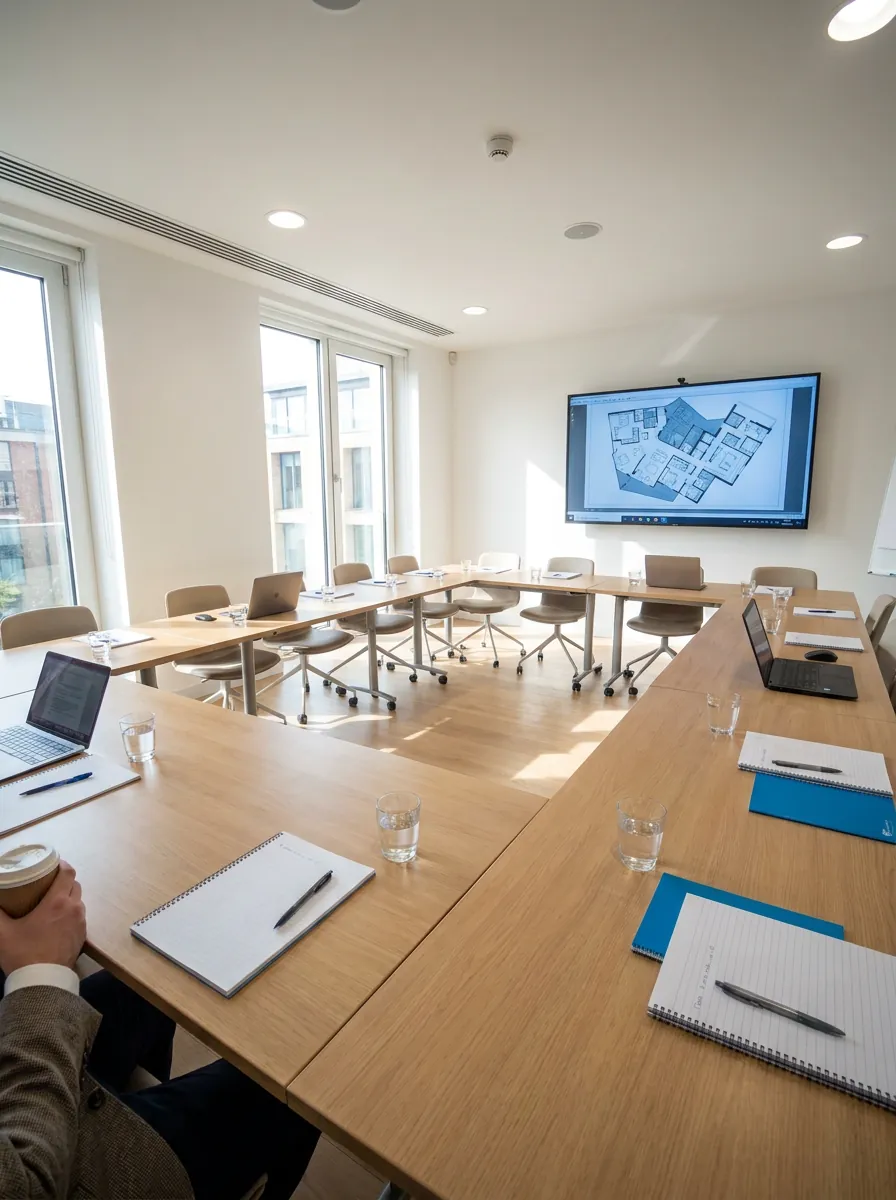
In-person seminars include drinks, coffee, and lunch, and there is time to talk with the other participants and with the trainers, who have real project experience.
Video course
The video course teaches the same content at your own pace, in German or English; access is valid for one year, and the exam and certificate are the same as for the in-person seminar and the live webinar.
Exam and certificate
After the seminar, you receive the link to the online exam by email and have one week to take it. When you pass, you receive the seminar certificate, which does not expire and can be verified publicly; you will find the seminar materials and the certificate in DCE Campus.
Prerequisites: none
A basic technical understanding helps; specialist knowledge of electrical engineering or cooling technology is not needed, as the fundamentals of electrical engineering are explained in the seminar from the start.
Dates and registration
Choose a date and format
Same content, same price, same certificate in every format.
€4,195 per participant, plus VAT, in every format
Your date
- Date
- Format and location
- Live webinar · online
- Language
- English
Registration
Data Center – General Principles
€4,195
Price plus VAT at the statutory rate.
Date:
09/11/2027 - 11/11/2027
Format:
Webinar
Language:
Seminar price:
€4,195
More dates
- Register
Live webinar · online · English
- Register
In person · Frankfurt am Main · German
- Register
Live webinar · online · English
- Register
Live webinar · online · English
- Register
Live webinar · online · German
- Register
In person · Frankfurt am Main · German
- Register
Live webinar · online · German
- Register
Live webinar · online · English
- Book
at your own pace
Video course · access for one year from booking · English
- Book
at your own pace
Video course · access for one year from booking · German
No suitable date, or several participants from one company? Thomas Wawra advises you on dates, formats, and framework agreements.
Before you register
Frequently asked questions
No. A basic technical understanding helps, but specialist knowledge of a particular discipline is not needed; the fundamentals of electrical engineering and refrigeration are explained in the seminar.
Yes, if you follow the Data Center Specialist training path, and it is worthwhile in any case. The seminar is called General Principles, but it goes into depth in every discipline; experienced participants place their own discipline within the overall system and get to know the adjacent disciplines at the same level.
The Data Center Passport is a one-day live webinar: a basic understanding of how a data center is built and of its disciplines, plus rules of conduct for work in a data center. Data Center – General Principles goes into depth over three days (structure of the series of standards, Availability Classes, KPIs, legal framework) and is the first step of the Data Center Specialist training path.
After passing the exam, you receive a seminar certificate from DCE academy. You receive the link to the online exam by email after the seminar and have one week to take it. The certificate does not expire, can be verified publicly, and counts as the first of four seminars toward the Data Center Specialist certificate.
Yes. In-person seminar, live webinar, and video course teach the same content at the same price; you choose the format when you register. The seminar dates show which date takes place in which format and language. You work through the video course at your own pace, with access for one year; the exam and certificate are the same.
Yes, as a live webinar several times a year, and also as an English video course. The in-person dates are held in German; the language and format are shown for each date.
Yes. DCE academy does not sell products and does not represent any manufacturer; no products are sold in the seminar. Its aim is to pass on knowledge and train people well, with experts who know their subject from ongoing projects.
The seminar Data Center Design & Implementation, as the second step of the training path; after that, Data Center Operations – Professional and Deep Dive – Power Supply & Cooling follow in any order. After all four seminars, you receive the Data Center Specialist certificate.