Seminar for data center managers, specialist planners, facility managers, and IT managers
Liquid Cooling, DC Power and High-Bandwidth Cabling
Designing and operating data centers with high power densities: direct liquid cooling, power supply, and high-bandwidth cabling
At a glance
In three days, you learn what direct-to-chip liquid cooling means for data centers with high power densities: for environmental control, for power supply and cabling, and for commissioning, operation, and responsibilities.
You can then assess how AI and HPC systems affect the entire infrastructure and what implementing them requires technically, economically, and in operation.
Focus on D2C and L2L
The seminar focuses on direct-to-chip liquid cooling (D2C) with liquid-to-liquid heat transfer (L2L) and on what it changes in the data center.
Cooling, power, and cabling
Technologies for environmental control and their limits, comparing the systems by total cost of ownership, power supply and distribution including DC power, and cabling for current and future high-speed applications.
Safe operation and interfaces
Commissioning, monitoring, and operational reliability, new responsibilities between building services and IT, coolant quality, and connection technology.
Trainers with real project experience
The trainers work in the design, operation, and manufacture of these systems; each seminar day ends with a quiz on the content.

Why Liquid Cooling, DC Power and High-Bandwidth Cabling?
In enterprise data centers with mixed IT, power has been at 5 kW to 10 kW per rack for years, and an air-cooled rack in a conventional server and storage environment carries 8 kW to 12 kW.
At high power densities, the recommendation to coordinate cabling early becomes a prerequisite, because pipework, busbars, and cable pathways share the same space and transmission channels for 400 and 800 Gb/s have their own rules.
This is exactly where the seminar comes in. It treats cooling, power supply, cabling, and operation as one system, with trainers from design, operation, and manufacturing. This saves you weighing manufacturer data for several disciplines against each other on your own and protects you from decisions at the interfaces that can only be corrected with considerable effort after construction.
AI and HPC systems
Systems for HPC and AI are far above this: 30 kW is common there, 80 kW to 120 kW per rack are being implemented, and individual processors and accelerators reach a power dissipation of 700 W.
Cooling option by rack power
From around 35 kW per rack, enclosed cabinets and rear door coolers help; up to around 75 kW, hybrid liquid cooling works; above that begins the range of fully liquid-cooled systems. The guide values come from the seminar materials of DCE academy. Liquid cooling is not automatically a decision for efficiency: whether it pays off depends on density, available space, technical feasibility, and waste heat reuse.
Losses in double conversion
With cooling, the other two disciplines change as well. A UPS with double conversion reaches an efficiency of around 95 to 96%; the losses arise in the two conversions, and DC power distribution addresses exactly that point.
Size early, coordinate early
EN 50600-2-2 requires the power supply to be sized with an allowance for future growth and higher power density. EN 50600-2-4 recommends designing the cabling early and in coordination with the power supply and environmental control.
Who it is for
Who is this seminar for?
Data center managers and operations managers
who provide space for AI or HPC systems and have to decide on cooling, power supply, and cabling together.
Specialist planners and engineers for electrical engineering, cooling, and cabling
who design a new build, an extension, or a retrofit of a data center for high power densities.
Facility managers and building services technicians
who operate water circuits, coolant distribution units, power distribution, and cable pathways and are responsible for the interface with IT.
IT managers and administrators
who procure AI or HPC systems and represent their requirements for water temperature, power, and bandwidth to building services.
Energy officers and energy managers
who assess efficiency and waste heat reuse as power density increases.
Quality managers and internal auditors
who check the design, commissioning, and operation of such systems.
Manufacturers and sales staff of infrastructure components
who discuss the overall system with planners and operators.
Prior knowledge of the disciplines of a data center helps; if you want to build it up, you will find it in the seminar Data Center – General Principles. The seminar Deep Dive – Power Supply & Cooling covers power supply and cooling in depth.
Trainers and credentials
Trainers who work on current projects
The trainers on this seminar come from real projects; they have applied what they teach in their own data center projects. Which trainers lead a date depends on the date and format; the content is the same.
Senior Engineer & Inhaber · Pius Albisser – Next Level Solutions
Solution Architect DataCenter · Schneider Electric GmbH
Geschäftsführender Inhaber · Stromdrazer Consultant
Kümmerer, Weiterdenker und Problemlöser · Correct Power Institute
Chief Education & Alliance Officer · DCE academy


Vendor-neutral
DCE academy does not sell products and does not represent any manufacturer. Its only aim is to pass on knowledge and train people well, with experts who know their subject from ongoing projects. Products are not sold in the seminar.
First-hand standardization work
DCE academy is the exclusive sponsor of the ISO/IEC 22237 working group and is informed about every meeting of the standards committee and its content. Changes to EN 50600 and ISO/IEC 22237 are incorporated into the seminars, often months before publication. Member of the German Datacenter Association.
- Training since 2007
- for the planning, construction, and operation of data centers
- More than 1,000 participants
- with a DCE academy certificate
- More than 25 experts
- among our trainers
- 97% of participants
- rate their seminar as good or very good (participant feedback 2023–2026)
What you will take away
After the seminar you will be able to
assess what changes with direct-to-chip liquid cooling (D2C) and liquid-to-liquid heat transfer (L2L) compared with current operation, and what stays the same;
know the IT concepts for AI and HPC systems and the technical conditions that follow from them for the data center;
know the requirements of current and future high-speed applications for IT cabling and assess how high-bandwidth cabling is implemented in the data center;
know technologies for environmental control and their limits and compare the systems by total cost of ownership (TCO);
assess concepts for power supply and distribution at high power densities, including DC power;
prepare commissioning, monitoring, and safe operation, clarify responsibilities and interfaces between building services and IT, and understand the role of coolant quality and connection technology.
Content
Five modules
The five modules follow the three seminar days: from IT requirements through cabling, cooling, and power supply including DC power to safe operation.
The module clarifies what direct-to-chip liquid cooling with liquid-to-liquid heat transfer changes for the data center, where IT for AI and HPC is heading, and which technical conditions follow from it.
- New challenges, or does everything stay the same?
- Future IT architectures for AI and HPC and rising power densities
- Technical conditions for D2C and L2L in the data center
AI and HPC systems require transmission rates for which cabling in the data center has to be rethought. The module shows which requirements arise and how high-bandwidth cabling is implemented.
- Requirements of current and future high-speed applications for IT cabling in the data center
- AI as a turning point: how high-bandwidth cabling is implemented in the data center
With direct liquid cooling, the focus is not on the room air but on transferring heat from the IT cooling circuit to the facility water. The module covers the technologies, their limits, and how the systems compare.
- Liquid cooling with D2C and L2L: technologies, possibilities, and limits
- Cooling architectures, control, and integration into the existing infrastructure
- Comparing the systems by total cost of ownership (TCO)
More power per rack requires a different power supply and power distribution. The module presents concepts for data centers with high power densities and assesses the role DC power plays in them.
- Concepts for power supply and power distribution at high power densities
- DC power in the data center's power supply and distribution
- Assessment for data centers with direct liquid cooling
A liquid cooling project is not just a cooling project, but an IT, hydraulics, energy, and operations project at the same time. The module leads from commissioning into safe operation and to the interfaces between building services and IT.
- Commissioning, monitoring, and operational reliability
- New responsibilities and technical interfaces between building services and IT
- Coolant quality and how it is monitored
- Connection technology: universal quick disconnect couplings compared
- Test environments for liquid cooling: concept, goal, and expectations
Standards and practice
Standards, laws, regulations
The seminar covers the following standard parts, laws, and regulations:
EN 50600‑1 General concepts
Availability Classes as a common framework for power supply, environmental control, and cabling
EN 50600‑2‑2
Power supply and distribution
EN 50600‑2‑3
Environmental control
EN 50600‑2‑4
Telecommunications cabling infrastructure
EN 50173‑5
Generic cabling in data centers
EN 50600‑3‑1
Management and operation, commissioning
How it works and prerequisites
How does the seminar work?
Seminar times and materials
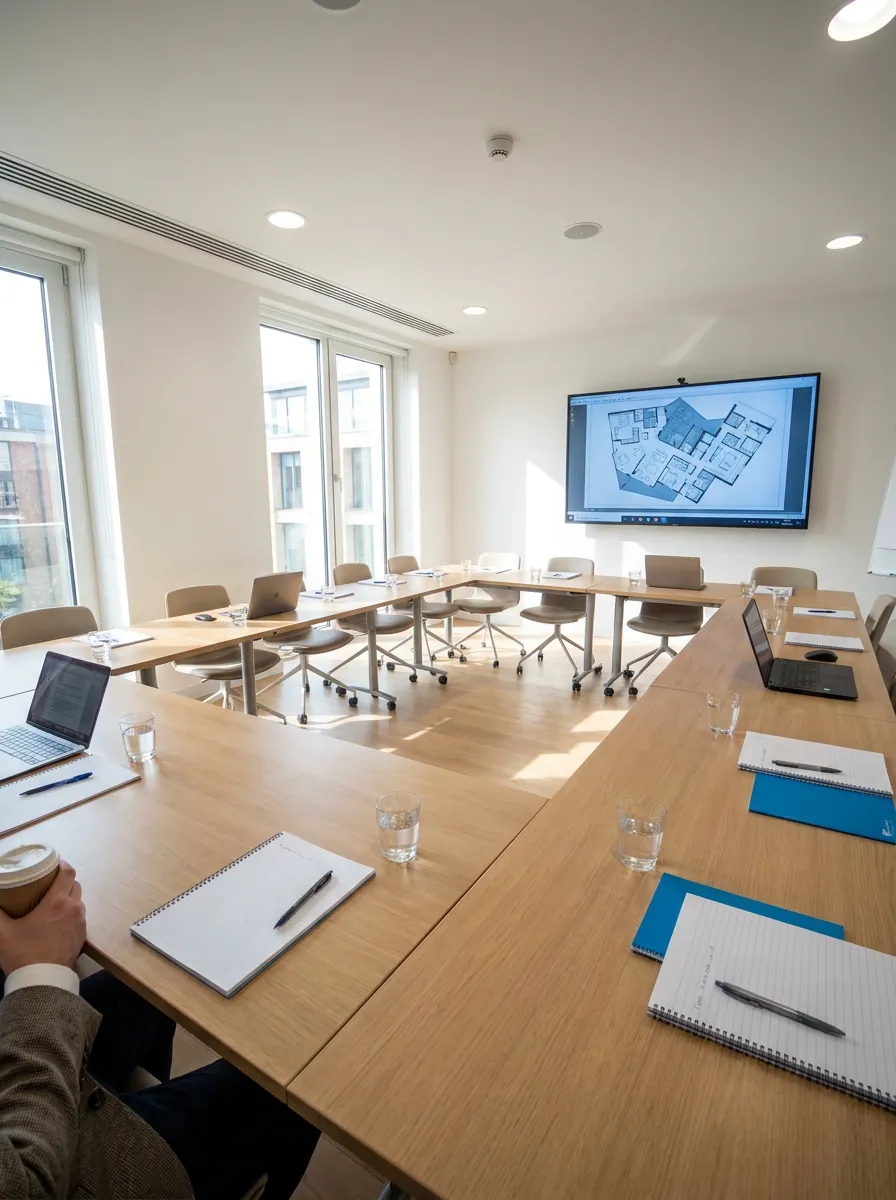
Three seminar days in person. The first seminar day usually starts at 10:00, the following days at 09:00; the seminar ends at around 17:00 on the first two days and at around 16:00 on the third day. You receive the seminar materials as a PDF in the language in which the seminar is held.
Talks, discussion, and a quiz
Each session starts from a question that comes up in real projects and leaves room for questions and discussion; at the end of each seminar day, a quiz sums up the content.
In person
Drinks, coffee, and lunch are included, and there is time to talk with the other participants and with the trainers, who have real project experience.
Exam and certificate
After the seminar, you receive the link to the online exam by email and have one week to take it. When you pass, you receive the seminar certificate, which does not expire and can be verified publicly; you will find the seminar materials and the certificate in DCE Campus.
Prerequisites: none
Knowledge of the disciplines of a data center, especially power supply and cooling, helps you follow the sessions; if you want to build it up, you will find it in the seminar Data Center – General Principles, and in depth in the seminar Deep Dive – Power Supply & Cooling.
Quality assurance through your feedback
Every DCE academy seminar is evaluated systematically. At the end of the seminar, or after the last lesson of the video course, we ask you in DCE Campus for a short rating of about two minutes: on your training needs, the teaching approach, the amount and structure of the content, the materials, the trainers and the organization. Three months later, we follow up by email to ask how well you can apply what you learned in practice. You can object to these emails at any time.
We analyze the results for each seminar and use them to improve content, materials and trainers. You can send suggestions and complaints to contact@dce-academy.com at any time. You will receive an acknowledgment within two business days and a response within ten business days at the latest.
Dates and registration
Choose a date and format
Same content, same price, same certificate in every format.
€4,195 per participant, plus VAT, in every format
Your date
- Date
- Format and location
- In person · Munich
- Language
- German
Registration
Liquid Cooling, DC Power and High-Bandwidth Cabling
€4,195
Price plus VAT at the statutory rate.
Date:
23/11/2027 - 25/11/2027
Location:
Munich
Language:
Seminar price:
€4,195
More dates
Seminar dates
No suitable date, or several participants from one company? Thomas Wawra advises you on dates, formats, and framework agreements.
Before you register
Frequently asked questions
As a guide value from the seminar materials of DCE academy: an air-cooled rack carries 8 kW to 12 kW, enclosed cabinets and rear door coolers are sufficient up to around 35 kW, hybrid liquid cooling with water-cooled processors and memory up to around 75 kW, and above that begins the range of fully liquid-cooled systems. The decision depends not only on density, but also on available space, technical feasibility, and waste heat reuse.
D2C stands for direct-to-chip: cold plates sit directly on processors, graphics processors, and other heat sources and remove the heat via a liquid. L2L stands for liquid-to-liquid: a coolant distribution unit transfers the heat from the IT cooling circuit to the facility water without the circuits mixing. The seminar focuses on this combination.
A coolant distribution unit separates the building’s water circuit from the IT cooling circuit and controls supply temperature and flow. It also clarifies responsibilities: without a CDU, building services have to ensure water quality and dew point margin themselves. Whether a CDU per rack, per row, or for the entire building makes sense depends on the number of racks and the concept.
DC power is part of the module on power supply, distribution, and DC power. Background: a UPS with double conversion reaches an efficiency of around 95 to 96% because alternating current is converted into direct current and back again; DC power distribution eliminates conversion stages. The seminar does not prescribe any products.
It refers to cabling for current and future high-speed applications, such as AI and HPC systems with transmission rates of 400 Gb/s and more. The seminar covers the requirements these applications place on IT cabling in the data center and how high-bandwidth cabling can be implemented. EN 50600-2-4 recommends designing cabling early and coordinating it with the power supply and cooling.
No formal prerequisites. Knowledge of the disciplines of a data center helps you follow the sessions; the seminar Data Center – General Principles teaches it in three days, and the seminar Deep Dive – Power Supply & Cooling covers power supply and cooling in depth in five days.
In its focus on high power densities. The seminar Deep Dive – Power Supply & Cooling covers both disciplines broadly over five days, from thermodynamics and refrigeration to network types, UPS, and metering technology, and gives an insight into liquid cooling. Liquid Cooling, DC Power and High-Bandwidth Cabling concentrates on direct-to-chip liquid cooling over three days and adds cabling as well as commissioning and operation.
Not at present; the seminar is held as an in-person seminar in German, in English on request. The dates with location are listed under the seminar dates.
Yes. DCE academy does not sell products and does not represent any manufacturer; no products are sold in the seminar. Its aim is to pass on knowledge and train people well, with experts who know their subject from ongoing projects.
After passing the exam, you receive a seminar certificate from DCE academy. You receive the link to the online exam by email after the seminar and have one week to take it. The certificate does not expire and can be verified publicly.