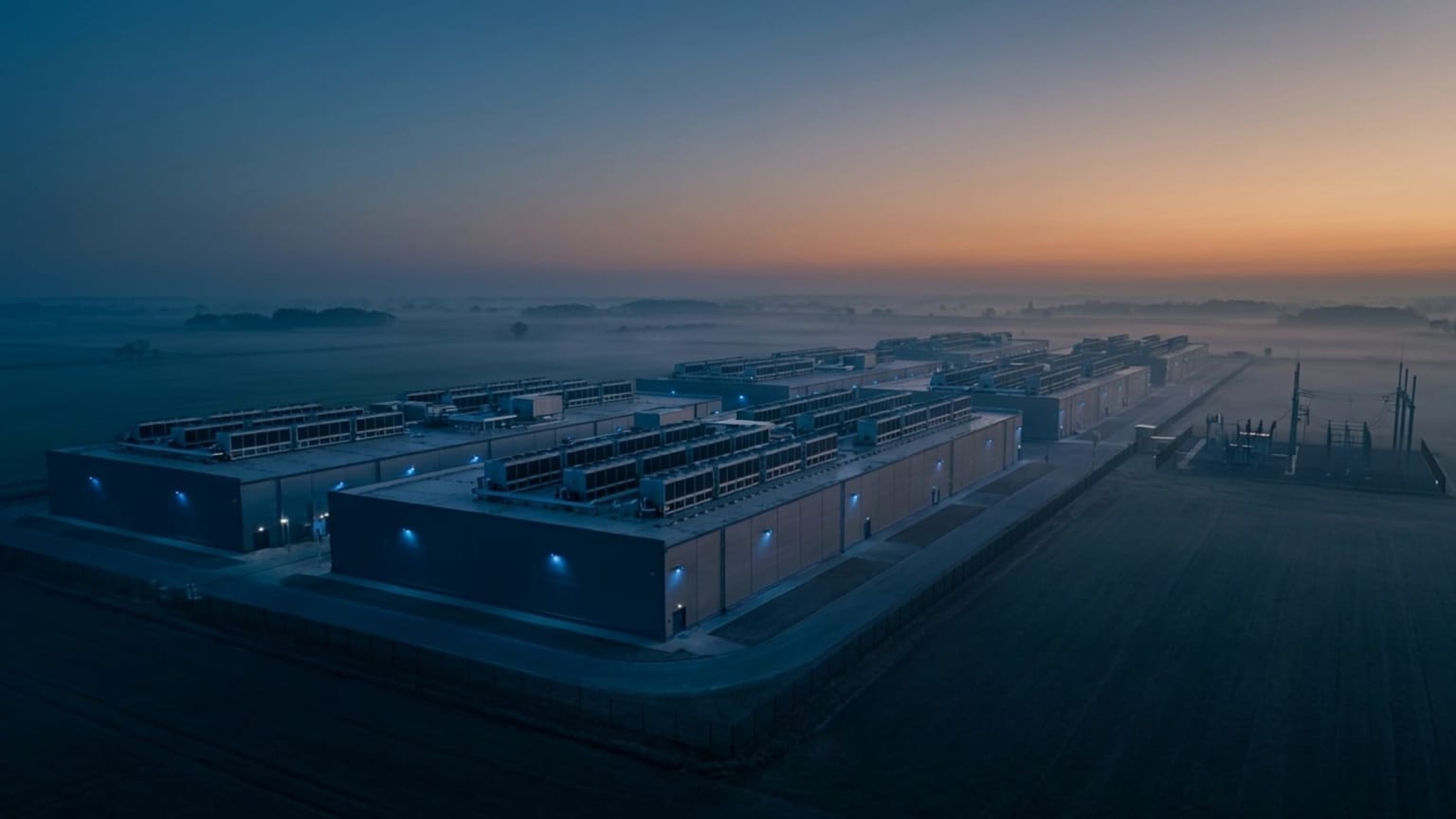
Seminar for data center managers, specialist planners, facility managers, and IT managers
Liquid Cooling, DC Power and High-Bandwidth Cabling
Designing and operating data centers for AI and HPC: liquid cooling, DC power, and high-bandwidth cabling as one system
At a glance
In three days, you learn how data centers with high power densities are designed and operated: which cooling option works at which rack power, what DC power distribution changes in the power supply, how cabling keeps pace with 400 Gb/s and more, and which processes and responsibilities operation requires.
You can then make decisions at the interfaces between the disciplines based on evidence, instead of weighing manufacturer data against each other.
Three disciplines, one system
The seminar covers the three disciplines that can no longer be designed separately at high power densities: cooling, power supply, and cabling.
Cooling, power, and cabling
You learn at which rack power air cooling reaches its limit and which type of liquid cooling works then, how water temperature classes, coolant distribution units, and water quality determine design and operation, what DC power distribution changes compared with an AC power supply with double conversion, and how cabling for 400 Gb/s and more is coordinated with the power supply and cooling.
Operation at the interfaces
The seminar concludes with operation, monitoring, and responsibilities at the interfaces.
Exercises and a case study
You work in exercises and on a case study; all trainers come from real projects.
Why Liquid Cooling, DC Power and High-Bandwidth Cabling?
In enterprise data centers with mixed IT, power has been at 5 kW to 10 kW per rack for years, and an air-cooled rack in a conventional server and storage environment carries 8 kW to 12 kW.
At high power densities, the recommendation to coordinate cabling early becomes a prerequisite, because pipework, busbars, and cable pathways share the same space and transmission channels for 400 and 800 Gb/s have their own rules.
This is exactly where the seminar comes in. It treats the three disciplines as one system, with evidence from the standard, manufacturer data, and ongoing projects. This saves you weighing manufacturer data for three disciplines against each other yourself and protects you from decisions at the interfaces that can only be corrected with considerable effort after construction.
AI and HPC systems
Systems for HPC and AI are far above this: 30 kW is common there, 80 kW to 120 kW per rack are being implemented, and individual processors and accelerators reach a power dissipation of 700 W.
Cooling option by rack power
From around 35 kW per rack, enclosed cabinets and rear door coolers help; up to around 75 kW, hybrid liquid cooling works; above that begins the range of fully liquid-cooled systems. The guide values come from the seminar materials of DCE academy. Liquid cooling is not automatically a decision for efficiency: whether it pays off depends on density, available space, technical feasibility, and waste heat reuse.
Losses in double conversion
With cooling, the other two disciplines change as well. A UPS with double conversion reaches an efficiency of around 95 to 96%; the losses arise in the two conversions, and DC power distribution addresses exactly that point.
Size early, coordinate early
EN 50600-2-2 requires the power supply to be sized with an allowance for future growth and higher power density. EN 50600-2-4 recommends designing the cabling early and in coordination with the power supply and environmental control.
Who it is for
Who is this seminar for?
Data center managers and operations managers
who provide space for AI or HPC systems and have to decide on cooling, power supply, and cabling together.
Specialist planners and engineers for electrical engineering, cooling, and cabling
who design a new build, an extension, or a retrofit of a data center for high power densities.
Facility managers and building services technicians
who operate water circuits, coolant distribution units, power distribution, and cable pathways and are responsible for the interface with IT.
IT managers and administrators
who procure AI or HPC systems and represent their requirements for water temperature, power, and bandwidth to building services.
Energy officers and energy managers
who assess efficiency and waste heat reuse as power density increases.
Quality managers and internal auditors
who check the design, commissioning, and operation of such systems.
Manufacturers and sales staff of infrastructure components
who discuss the overall system with planners and operators.
Prior knowledge of the disciplines of a data center helps; if you want to build it up, you will find it in the seminar Data Center – General Principles. The seminar Deep Dive – Power Supply & Cooling covers power supply and cooling in depth.
Trainers and credentials
Trainers who work on current projects
The trainers on this seminar come from real projects; they have applied what they teach in their own data center projects. Which trainers lead a date depends on the date and format; the content is the same.
Vendor-neutral
DCE academy does not sell products and does not represent any manufacturer. Its only aim is to pass on knowledge and train people well, with experts who know their subject from ongoing projects. Products are not sold in the seminar.
First-hand standardization work
DCE academy is the exclusive sponsor of the ISO/IEC 22237 working group and is informed about every meeting of the standards committee and its content. Changes to EN 50600 and ISO/IEC 22237 are incorporated into the seminars, often months before publication. Member of the German Datacenter Association.
- Training since 2007
- for the planning, construction, and operation of data centers
- More than 1,000 participants
- with a DCE academy certificate
- More than 25 experts
- among our trainers
- 98% of participants
- rate their seminar as good or very good (feedback forms 2023–2026)
What you will take away
After the seminar you will be able to
assess the rack power of your data center today and for the next three to five years and derive the cooling option from it: air cooling, rear door and in-row coolers, closed cabinet, hybrid liquid cooling, full liquid cooling, or immersion;
apply the ASHRAE water temperature classes from W17 to W+ as a design grid and match operation with the IT manufacturer’s data on pressure, flow rate, differential pressure, and temperature change;
separate water circuits and assign responsibility for them: coolant distribution units per rack, per row, or for the building, water quality, additives, dew point margin, leak detection, and the residual heat that remains in the air;
size the power supply for high power densities according to EN 50600-2-2, name the conversion stages and their losses, and assess DC power distribution as an option for your data center;
design cabling early and in coordination according to EN 50600-2-4: Availability Classes of the cabling, fiber for 400 and 800 Gb/s, loss budgets, cross-connects, and cable pathways that share space with pipework and busbars;
assess cost-effectiveness not only through PUE, but through usable waste heat, space productivity, avoided retrofits, and operational risk;
set up operation: agree on requirements for water quality, pressure, and flow, turn sampling, filtration, maintenance intervals, and leak monitoring into processes, and document the interface between building services and IT in the same way in design, commissioning, and service.
Content
Five modules
The five modules follow the path from power density to operation: from the question of where air cooling reaches its limit, through liquid cooling, power supply, and cabling as three disciplines of one system, to the processes that hold it together in operation.
Heat load is moving from room level to chip and rack level: rising power dissipation of processors combined with falling permissible case temperatures brings air cooling to a practical limit in dense HPC and AI systems. The module places rack power levels, cooling options, and decision situations.
- Power density in figures: mixed IT at 5 kW to 10 kW per rack, air-cooled up to 8 kW to 12 kW, HPC from 30 kW, AI with 80 kW to 120 kW per rack; power dissipation of individual processors up to 700 W
- Cooling landscape by rack power and number of racks: room cooling, row cooling, cabinet cooling, direct liquid cooling; transition stages up to around 35 kW and 75 kW
- Four routes from air to liquid: rear door, in-row, and overhead coolers; closed cabinet; cold plates directly on the processor, graphics processor, accelerator, memory, and power supply unit; immersion in single-phase or two-phase dielectric fluid
- When the decision is made: new build, extension, HPC and AI projects; the drivers are density, available space, technical feasibility, and waste heat reuse, not PUE alone
With liquid cooling, the focus is not on the room air but on the interface between facility water and IT. The module leads from the water temperature class through the coolant distribution unit to water quality and waste heat.
- ASHRAE water temperature classes (W17 to W+): maximum supply temperature as a common design grid for manufacturers, planners, and operators; W32 as a pragmatic target range in Europe; W45 and higher for waste heat reuse with a narrower choice of hardware
- Circuits and responsibilities: coolant distribution unit (CDU) between the facility water system and the technology cooling system, per rack, per row, or building-wide; without a CDU, building services take over water quality and dew point margin
- Water as an operating medium: corrosion and oxygen, biological growth, pH value and conductivity, additives only with the manufacturer’s approval; material mix, hoses, seals, and filtration matched to temperature and pH level
- Managing risks: condensation, leakage, pressure, flow, and differential pressure; residual heat from power supply units, memory, and the surroundings that is still removed by air
- Efficiency and waste heat: pump power compared with fan power, device fans at 5 to 10% of IT power with air cooling, year-round free cooling, waste heat directly or via a heat pump into the heating network; cost-effectiveness beyond PUE: usable waste heat, space productivity, avoided retrofits, operational risk
More power per rack requires a different power supply and power distribution. The module connects the requirements of EN 50600-2-2 with the conversion stages between grid, UPS, battery, and IT.
- Sizing according to EN 50600-2-2: maximum IT load with an allowance for growth and higher power density, load of environmental control, additional loads and losses; Availability Classes and granularity levels of power distribution
- AC power supply with double conversion: rectifier, battery, inverter, efficiency of around 95 to 96%, losses from the two conversions
- DC power distribution as an alternative: eliminated conversion stages, DC bus and battery storage, network types and protection concepts; assessment for new builds and existing facilities
- Power distribution in the computer room at high power densities: busbars, power distribution units, metering and monitoring per granularity level
EN 50600-2-4 recommends designing cabling at an early stage and coordinating it with the building, power supply, environmental control, and security systems. The module shows what transmission channels for 400 and 800 Gb/s require of design and installation.
- Availability Classes of the cabling according to EN 50600-2-4, matched to the classes of power supply and cooling; cross-connect with cable management, bend radius control, and slack storage
- Fiber for high bandwidths: singlemode and multimode in the data center, parallel optics for 400 and 800 Gb/s, loss budgets and connectors, migration of services from 10 through 100 to 800 Gb/s
- Cable pathways at high power densities: separation of fiber and copper data cables according to EN 50174-2, pathway systems with capacity and bend radius control, raised access floor without obstructing airflow, coordination with pipework and busbars
- Cabinets and racks: growth reserves, cable routing, and ventilation and cooling of the equipment according to EN 50600-2-4 and EN 50600-2-3
A liquid cooling project is not just a cooling project, but an IT, hydraulics, energy, and operations project at the same time. The module turns the design into processes, monitoring, and clear responsibilities.
- Agreeing on requirements: water quality, pressure, flow, differential pressure, and temperature changes between building services and IT; manufacturer approvals for coolants and additives
- Moving into operation: sampling, filtration, maintenance intervals, leak monitoring, monitoring of conductivity, pH value, and oxygen
- Documenting the interface: the same description in design, commissioning, and service; the manufacturer’s service and warranty limits; weight, connections, and CDU integration
- Responsibilities between facility management, IT, and service providers; monitoring of power, cooling, and cabling as the basis for KPIs and proof
Standards and practice
Standards, laws, regulations
The seminar covers the following standard parts, laws, and regulations:
EN 50600‑1 General concepts
Availability Classes as a common framework for power supply, environmental control, and cabling
EN 50600‑2‑2
Power supply and distribution, sizing with an allowance for growth and power density, granularity levels
EN 50600‑2‑3
Environmental control, supply pathways for temperature-controlled fluids, dew point
EN 50600‑2‑4
Telecommunications cabling infrastructure, early coordination, Availability Classes, cable pathways, cabinets
EN 50173‑5
Generic cabling in data centers, transmission channels
EN 50174‑2
Installation of cabling, separation of fiber and copper data cables
EN 50600‑4‑2, 4‑6, and 4‑7
PUE, Energy Reuse Factor, and Cooling Efficiency Ratio as KPIs
ASHRAE classes for liquid cooling
W17 to W+ as a design grid between manufacturers, planners, and operators
How it works and prerequisites
How does the seminar work?
Seminar times and materials
Three seminar days in person. The first seminar day usually starts at 10:00, the following days at 09:00; the seminar ends at around 17:00. You receive the seminar materials as a PDF in the language in which the seminar is held.
Exercises and a case study
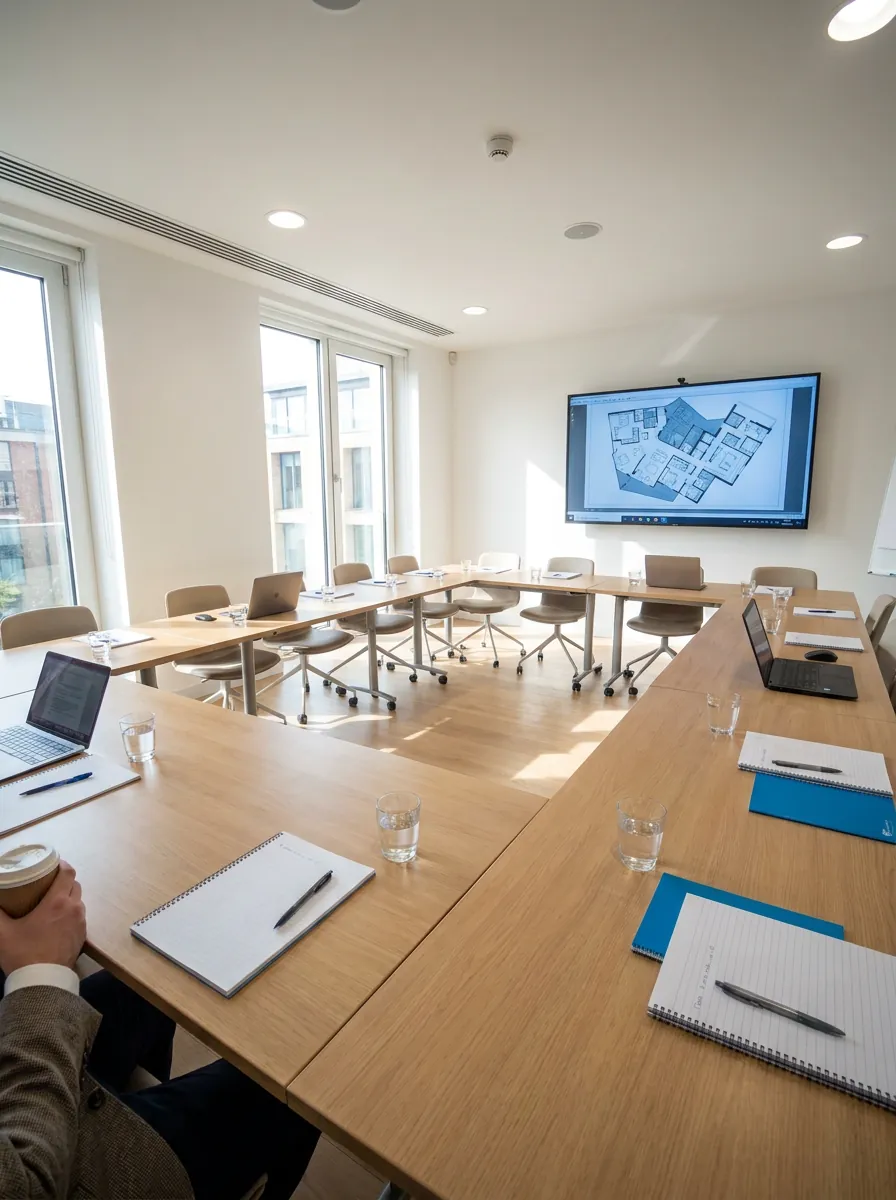
Short inputs alternate with exercises, calculation exercises, and discussions; a case study of a data center with high power densities brings the three disciplines together at their interfaces.
In person
Drinks, coffee, and lunch are included, and there is time to talk with the other participants and with the trainers, who have real project experience.
Exam and certificate
After the seminar, you receive the link to the online exam by email and have one week to take it. When you pass, you receive the seminar certificate, which does not expire and can be verified publicly; you will find the seminar materials and the certificate in DCE Campus.
Prerequisites: none
Knowledge of the disciplines of a data center, especially power supply and cooling, helps with the exercises; if you want to build it up, you will find it in the seminar Data Center – General Principles, and in depth in the seminar Deep Dive – Power Supply & Cooling.
Dates and registration
Choose a date and format
Same content, same price, same certificate in every format.
€4,195 per participant, plus VAT, in every format
Your date
- Date
- Format and location
- In person · Frankfurt am Main
- Language
- German
Registration
Liquid Cooling, DC Power and High-Bandwidth Cabling
€4,195
Price plus VAT at the statutory rate.
Date:
06/04/2027 - 08/04/2027
Location:
Frankfurt am Main
Language:
Seminar price:
€4,195
More dates
- Register
In person · Munich · German
- Register
In person · Frankfurt am Main · German
- Register
In person · Munich · German
No suitable date, or several participants from one company? Thomas Wawra advises you on dates, formats, and framework agreements.
Before you register
Frequently asked questions
As a guide value from the seminar materials of DCE academy: an air-cooled rack carries 8 kW to 12 kW, enclosed cabinets and rear door coolers are sufficient up to around 35 kW, hybrid liquid cooling with water-cooled processors and memory up to around 75 kW, and above that begins the range of fully liquid-cooled systems. The decision depends not only on density, but also on available space, technical feasibility, and waste heat reuse. In the seminar, you assess your own rack power for the next three to five years.
A coolant distribution unit separates the building’s water circuit from the IT cooling circuit and controls supply temperature and flow. It also clarifies responsibilities: without a CDU, building services have to ensure water quality and dew point margin themselves. Whether a CDU per rack, per row, or for the entire building makes sense depends on the number of racks and the concept; the seminar covers the criteria.
DC power stands for the power supply at high power densities: a UPS with double conversion reaches an efficiency of around 95 to 96% because alternating current is converted into direct current and back again. DC power distribution eliminates conversion stages. The seminar assesses it as an option, with sizing according to EN 50600-2-2, DC bus and battery storage, network types, and protection concepts; there is no product specification.
Transmission channels for 400 and 800 Gb/s, which in data centers run mainly over fiber with parallel optics. Loss budgets, connectors, cross-connects, and the choice between singlemode and multimode matter here. EN 50600-2-4 recommends designing cabling early and coordinating it with the power supply and cooling; at high power densities, cable pathways, pipework, and busbars share the same space.
No formal prerequisites. Knowledge of the disciplines of a data center helps with the exercises; the seminar Data Center – General Principles teaches it in three days, and the seminar Deep Dive – Power Supply & Cooling covers power supply and cooling in depth in five days.
In its focus on high power densities. The seminar Deep Dive – Power Supply & Cooling covers both disciplines broadly over five days, from thermodynamics and refrigeration to network types, UPS, and metering technology, and gives an insight into liquid cooling. Liquid Cooling, DC Power and High-Bandwidth Cabling concentrates on data centers for AI and HPC over three days and adds cabling as the third discipline.
Not at present; the seminar is held as an in-person seminar in German, in English on request. The dates with location are listed under the seminar dates.
Yes. DCE academy does not sell products and does not represent any manufacturer; no products are sold in the seminar. Its aim is to pass on knowledge and train people well, with experts who know their subject from ongoing projects.
After passing the exam, you receive a seminar certificate from DCE academy. You receive the link to the online exam by email after the seminar and have one week to take it. The certificate does not expire and can be verified publicly.